

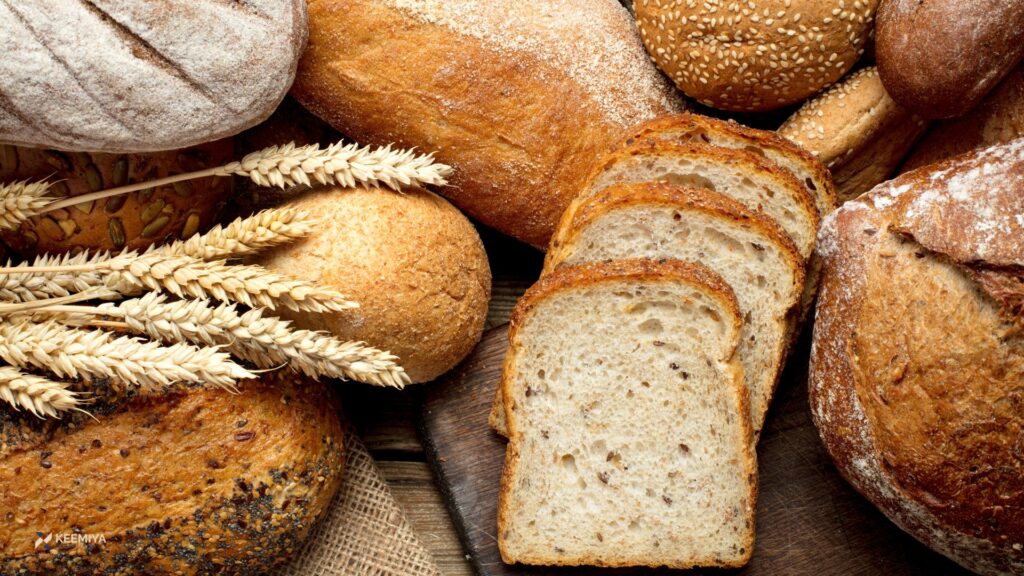
“Discover how xylanases are transforming industrial bread production. Learn how bacterial and fungal xylanase enzymes improve dough handling, bread volume, texture, and freshness in modern bakeries”.
In the rapidly evolving world of industrial baking, enzymes have become essential tools for achieving consistency, efficiency, and superior quality. Among them, xylanases are transforming how dough behaves and how bread looks, feels, and tastes. By modifying flour components naturally, these enzymes enable bakers to produce softer loaves with higher volume and extended shelf life — all without relying on chemical additives.
What Are Xylanases?
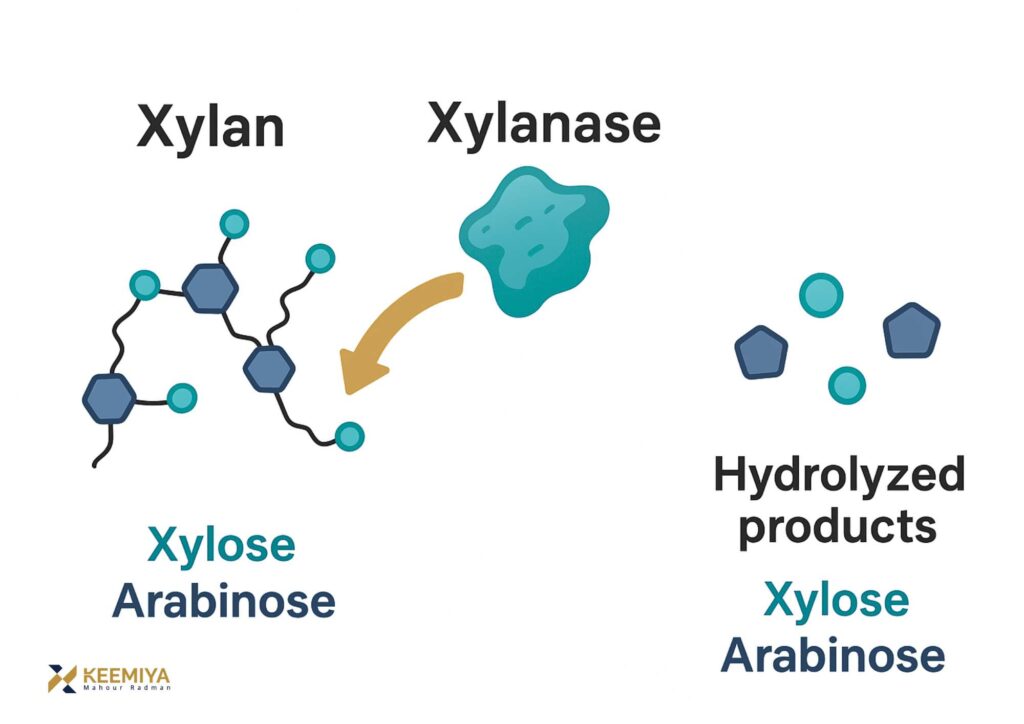
Xylanases are enzymes that break down xylan, a key part of the wheat flour cell wall structure known as hemicellulose. In wheat, most xylan occurs as arabinoxylan, which binds significant amounts of water and influences dough viscosity.
By selectively hydrolyzing arabinoxylans, xylanases release bound water, making the dough more extensible, stable, and uniform during mixing, fermentation, and baking.
The Role of Xylanases in Industrial Bread Making
- Enhanced Dough Handling
Xylanases reduce the water-holding capacity of arabinoxylans, making doughs softer, smoother, and easier to process in mechanical systems — a crucial advantage for high-speed production lines. - Increased Bread Volume
Controlled enzymatic activity strengthens gluten structure and gas retention, resulting in loaves with a better rise and improved symmetry. - Improved Crumb Structure and Softness
Moderate xylanase activity produces a finer, more uniform crumb and soft texture — key attributes in sandwich breads and pan loaves. - Extended Freshness and Shelf Life
By optimizing water distribution, xylanases help retain moisture and delay staling, keeping bread soft and fresh longer. - Reduced Dough Stickiness
Properly dosed xylanases improve dough machinability, minimizing sticking problems in industrial mixing, sheeting, and moulding processes.
Read more: How Enzymes Like Protease, Xylanase and Phospholipase Are Replacing Chemicals in Semi-Sweet Biscuits
Bacterial Xylanase (ECOENZYME-XLY B) vs. Fungal Xylanase (ECOENZYME-XYL F): What’s the Difference?
Bacterial xylanases (ECOENZYME-XYL B) tend to act more effectively on insoluble arabinoxylans (fiber-rich fractions). Flour that has higher fiber or bran content (such as whole wheat or high-extraction flour) contains more insolouble arabinoxylans. These are complex hemicellulose structures found in the cell walls of wheat bran.
Bacterial xylanases can break down cell wall components, release bound water and reduce dough stiffiness; this improves loaf volume, softness and crumb unifirmity even in whole grain or bran rich doughs.
Fungal Xylanases (ECOENZYME-XYL F) are more effective on soluble arabinoxylans (the water-extractable fraction) so they improve dough handling and gas retention in refined flours with lower fiber content.
Fungal xylanases are gentler and ideal for balanced improvement in everyday bread doughs.
Blends of both types can deliver optimum dough conditioning in industrial systems.
Choosing the Right Xylanase for Your Bakery
The right enzyme depends on several factors:
- Flour quality: Weak flours may benefit from bacterial xylanases for improved strength, while strong flours work better with fungal types.
- Processing method: Mechanical or high-speed lines often require thermostable bacterial enzymes.
- Desired texture: For soft, open-crumb breads, fungal xylanases provide better control and consistency.
- Fiber content: For the flour that has higher fiber or bran content (such as whole wheat or high-extraction flour) bacterial xylanases work more effectively.
Working in Synergy with Other Baking Enzymes
In commercial enzyme systems, xylanases are often paired with complementary enzymes:
- Amylases – improve yeast fermentation and crust color.
- Glucose oxidase – strengthens gluten and gas retention.
- Lipases or phospholipases – enhance crumb softness and volume stability.
This synergistic approach allows bakers to achieve better dough performance and bread quality naturally.
Benefits of Xylanases in Industrial Bread Production
- Higher loaf volume and improved symmetry
- Softer, finer crumb structure
- Better dough handling and machinability
- Consistent results across large batches
- Naturally extended shelf life
- Reduced need for chemical improvers
Conclusion
Xylanases — whether bacterial or fungal — are reshaping industrial bread production.
By acting on arabinoxylans in flour, they fine-tune dough rheology, improve loaf volume, and preserve softness naturally.
Understanding the functional differences between enzyme sources helps bakers choose the right formulation for each product, achieving consistent quality, efficiency, and consumer satisfaction through advanced enzyme technology.