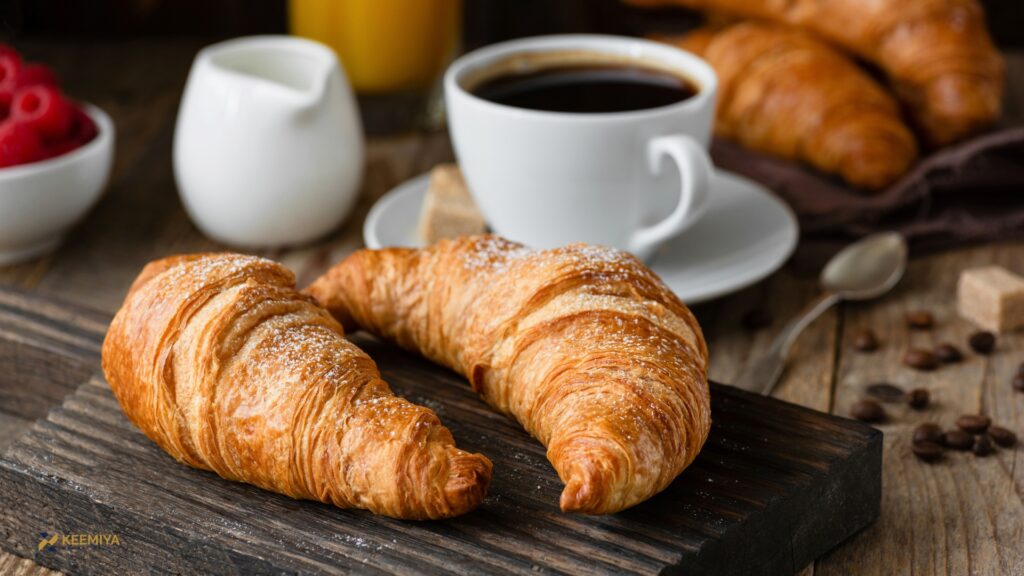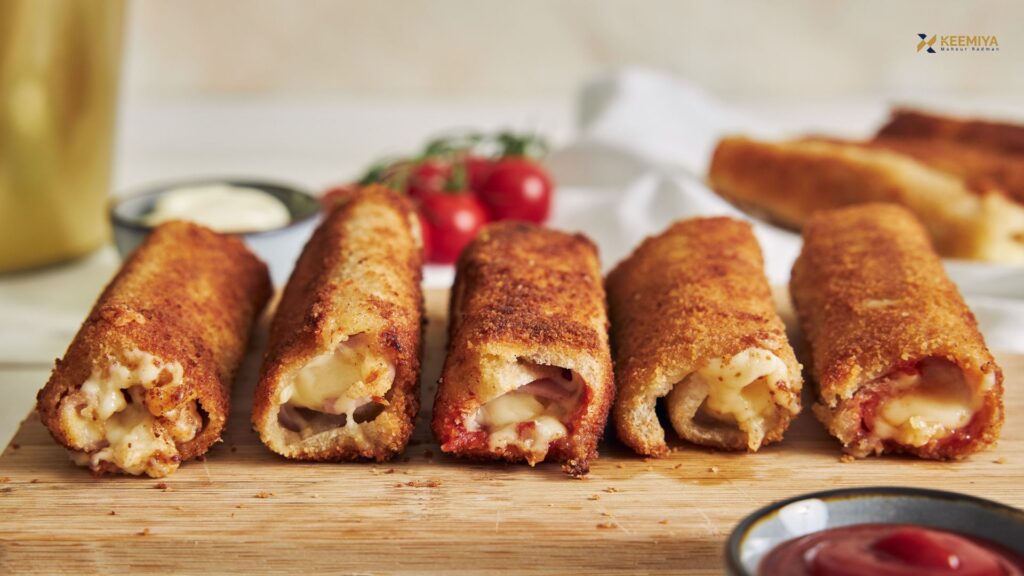
Rollability and bending performance are critical quality attributes for toast breads used in wraps, rolled sandwiches, and folded applications. Many formulations deliver excellent loaf volume, softness, and appearance, yet fail during rolling — tearing instead of bending smoothly.
This failure is often misunderstood. Rollability is not controlled by a single ingredient or enzyme, but by the mechanical balance of the bread structure. Enzymes influence rollability only through three fundamental mechanisms.
The Three Core Factors That Control Rollability
From a structural and rheological standpoint, rollability is governed by three interacting systems:
- Gluten strength and crosslink density
- Water distribution and stress dissipation
- Starch phase behavior and plasticity
A failure in any one of these can lead to cracking or tearing during bending, even if the other two are well controlled.

1. Gluten Strength: The Structural Backbone
Why gluten strength matters
Gluten forms the continuous protein network that holds the crumb together. During rolling, this network must deform without rupturing.
- Too weak gluten → bread cracks and breaks
- Too strong or over-crosslinked gluten → bread resists bending and tears
This means rollability requires moderate strength, not maximum strength.
Key mechanical concepts
- Elasticity: tendency to spring back
- Extensibility: ability to stretch
- Plasticity: ability to deform permanently without damage
Rolling requires plastic deformation, not elastic recovery.
Enzymes influencing gluten strength
- Glucose oxidase (GO) – ECOENZYME -GO
- Increases disulfide bonding
- Raises elasticity
- Excessive levels reduce extensibility and plasticity
At low to moderate dosage, GO supports structure.
At high dosage, it is one of the most common causes of poor rollability.
2. Water Distribution: Stress Dissipation During Bending
Why water distribution is critical
When toast bread is bent or rolled, internal stresses must be distributed evenly. Poor water distribution leads to:
- dry zones
- rigid crumb areas
- localized cracking
This issue is amplified in:
- high-fiber formulations
- seeded breads
- toast with flakes or whole grains
Role of arabinoxylans (AX)
Arabinoxylans bind large amounts of water. If water is locked in rigid AX structures, the crumb becomes stiff and unable to bend smoothly.
Enzymes controlling water distribution
- Xylanase (especially bacterial xylanase) – ECOENZYME XYL
- Converts water-unextractable AX (WU-AX) into water-extractable AX (WE-AX)
- Releases bound water gradually
- Improves extensibility and stress distribution
Xylanase is the primary enzyme controlling extensibility in rollable toast breads.
Over-dosage can weaken structure, but under-dosage leads to brittle bending behavior.
3. Starch Behavior: Softness and Plastic Deformation
Why starch matters in rolling
During bending, starch acts as the continuous filling phase between gluten strands. Its behavior determines whether the crumb:
- deforms smoothly, or
- fractures under strain
A crumb can be soft yet still fail rolling if starch behaves in an overly elastic or rubbery way.
Enzymes affecting starch behavior
- Maltogenic amylase (MA) – ECOENZYME MA
- Slows starch retrogradation
- Maintains crumb softness during storage
- Improves plastic deformation of the starch gel
At moderate dosage, MA supports rollability by preventing cracking.
At excessive dosage, MA can create an elastic, rubber-like starch phase that transfers stress back to the gluten network, leading to tearing.
MA improves softness and plasticity — not gluten relaxation.
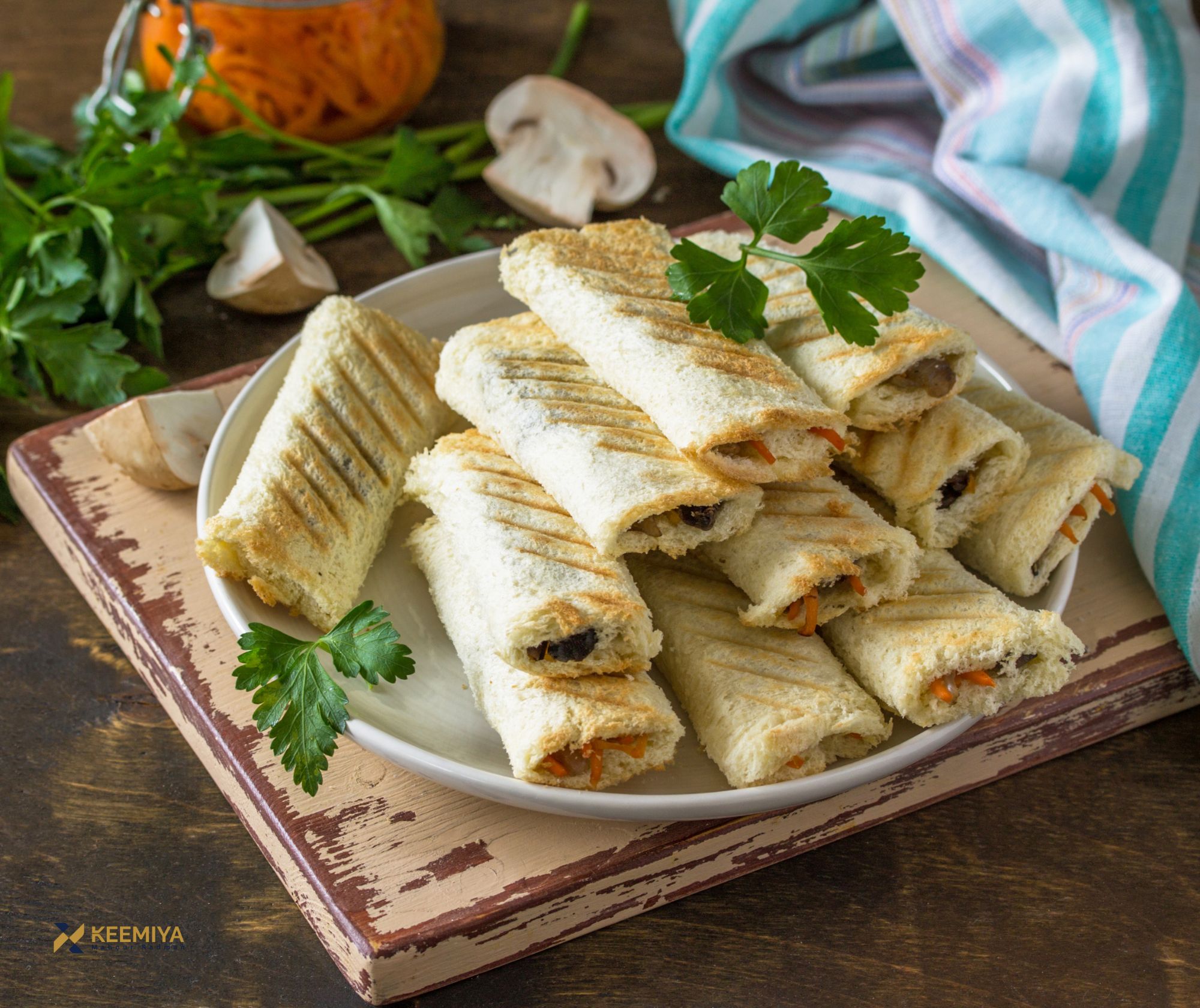
How Enzymes Interact Across the Three Systems
Each enzyme acts on a different structural level, but their effects overlap mechanically.
| Enzyme | Main system affected | Effect on rollability |
|---|---|---|
| Glucose oxidase (ECOENZYME-GO) | Gluten strength | Increases elasticity; excess reduces rollability |
| Xylanase (ECOENZYME-XYL) | Water distribution | Increases extensibility and stress tolerance |
| Maltogenic amylase (ECOENZYME-MA) | Starch phase | Improves plasticity; excess causes rubbery crumb |
Rollability is achieved when:
- gluten is strong but not over-crosslinked
- water is evenly distributed
- starch remains soft and plastically deformable
Why High Volume Toast Can Still Tear When Rolled
A common formulation mistake is over-engineering structure:
- strong oxidants
- high strengthening emulsifiers
- added gluten
- excessive enzyme dosing
This produces:
- excellent loaf volume
- good slicing performance
- but poor bending and rolling behavior
In such cases, reducing strength improves functionality more than adding softness.
So rollability fails not because bread is too weak, but because it is too elastic and insufficiently plastic.
Successful rollable toast bread requires:
Conclusion
Rollability and bending of toast bread are governed by mechanical balance, not by softness or volume alone.
By understanding how gluten strength, water distribution, and starch behavior interact — and how enzymes influence each — bakers can design toast breads that perform consistently in real-world applications.
When the balance is right, toast bread bends smoothly, rolls without tearing, and delivers the functional quality demanded by modern consumers.