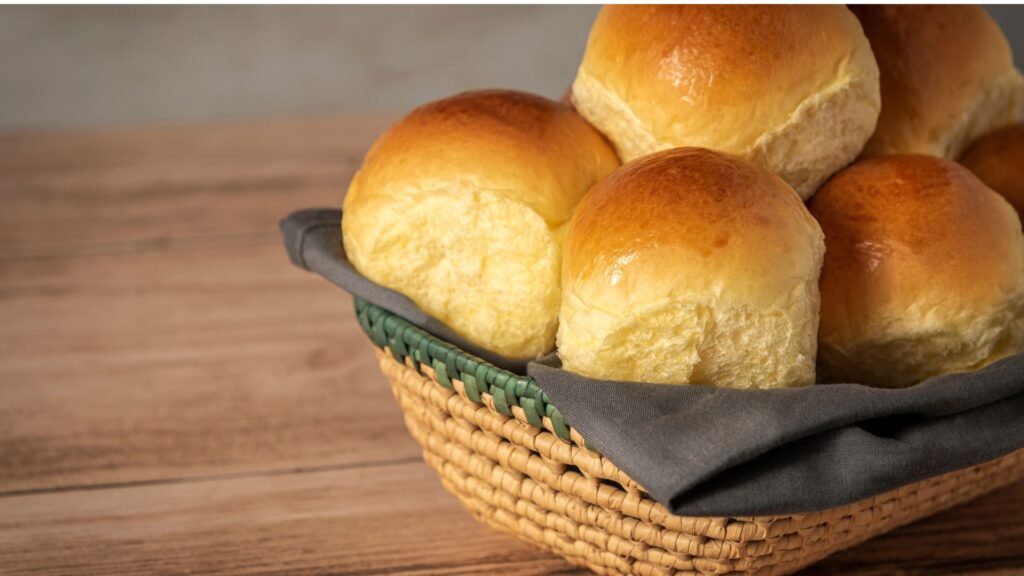
Modern baking is no longer only an art — it is a controlled biochemical process where enzymes are the driving force behind dough development, fermentation, texture, volume, color, and shelf life.
While flour naturally contains some enzymes, advanced baking relies on specific added enzymes that target starch, gluten, lipids, polysaccharides, and dough rheology.
Why Enzymes Matter in Dough Processing
Enzymes are biocatalysts that speed up chemical reactions without being consumed.
In dough:
- They modify starch → improving fermentation and softness
- They adjust gluten behavior → improving handling and volume
- They break down hemicellulose → improving gas retention
- They alter lipids → improving crumb structure
- They delay staling → extending shelf life
They act only during mixing, fermentation, and early baking, because most enzymes deactivate above 60–75°C, except thermostable bacterial amylases.
Key Enzymes and Their Mechanisms Inside Dough
Below is a technical breakdown of the most important enzyme classes used in baking.
A. Amylases — Backbone of Fermentation and Crumb Softness
1. Fungal α-Amylase (ECOENZYME-FAA)
- Breaks internal α-1,4 starch bonds
- Produces maltose and dextrins
- Improves:
- Fermentation activity
- Loaf volume
- Crust color
- Crumb softness
2. Maltogenic Amylase (ECOENZYME-MA)
- Special exo-amylase acting on non-reducing ends
- Delays amylopectin retrogradation
- Extends shelf life and softness
- Reduces crumbliness
3. Bacterial Thermostable Amylases (ECOENZYME-BAA)
- Active during later baking stages
- Used in soft breads, burger buns, and long-life bakery items
4. Native Wheat Amylases (α and β)
- Provide natural fermentation sugars
- Insufficient in sound wheat → need for correction
B. Xylanases — The Hidden Strength Builders
Xylanases (ECOENZYME-XYL F, ECOENZYME-XYL B) break down arabinoxylans (AX) in bran and endosperm cell walls.
Effects in dough:
- Increase dough extensibility
- Improve gas retention
- Increase loaf volume
- Reduce mixing time
- Improve crumb openness
Xylanases are especially important in:
- High-extraction flour
- Whole wheat bread
- Flours with high fiber or bran content
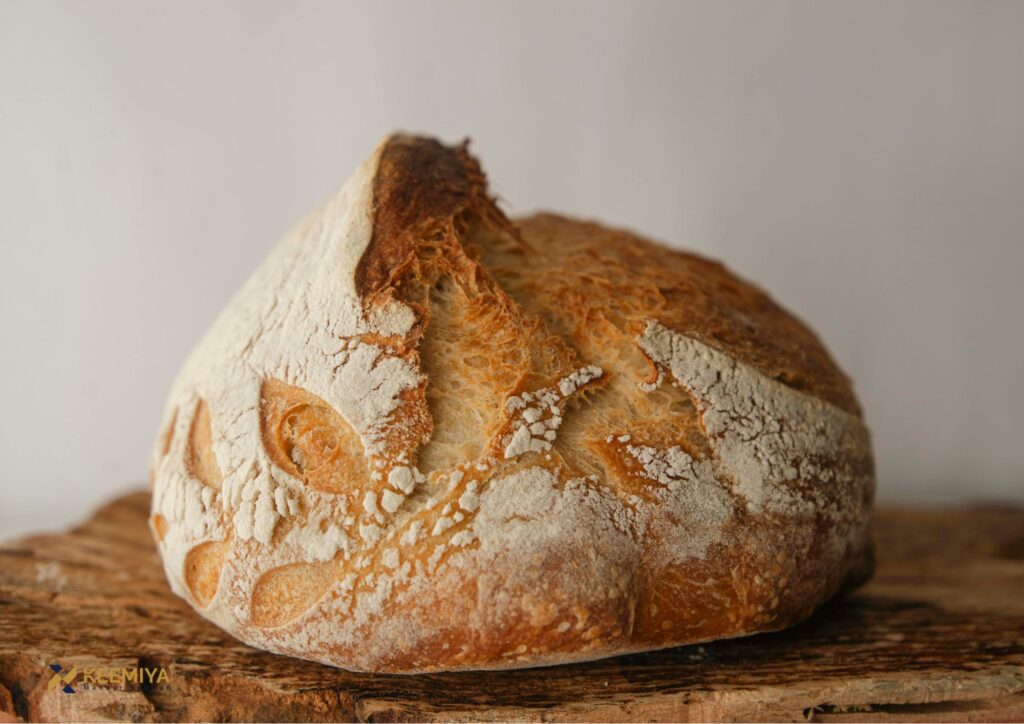
C. Proteases — Gluten Relaxation and Dough Handling
Proteases (ECOENZYME – NP) hydrolyze peptide bonds in gluten proteins.
Effects:
- Reduce dough elasticity
- Increase extensibility
- Useful for:
Too much protease can cause sticky, weak dough → exact dosage is critical.
D. Lipases & Phospholipases — Natural Emulsifier Creators
Lipases (ECOENZYME-LIP) and phospholipases (ECOENZYME-PL) modify flour lipids to create lysophospholipids, which act like natural emulsifiers.
Benefits:
- Improve crumb structure
- Strengthen gluten network
- Increase volume
- Improve softness and shelf life
- Reduce need for chemical emulsifiers (DATEM, SSL)
Phospholipases are especially powerful in replacing traditional improvers.
E. Glucose Oxidase — Natural Dough Strengthener
Glucose Oxidase (ECOENZYME-GO) oxidizes glucose to hydrogen peroxide → crosslinks gluten proteins.
Benefits:
- Strengthens dough
- Improves gas retention
- Enhances dough stability
- Replaces chemical oxidizers (ADA, bromate)
How Enzymes Work During Dough Stages
1. Mixing
- Enzymes become hydrated and activated
- Amylases break damaged starch → produce fermentable sugars
- Proteases start softening strong gluten
- Xylanases begin opening cell walls
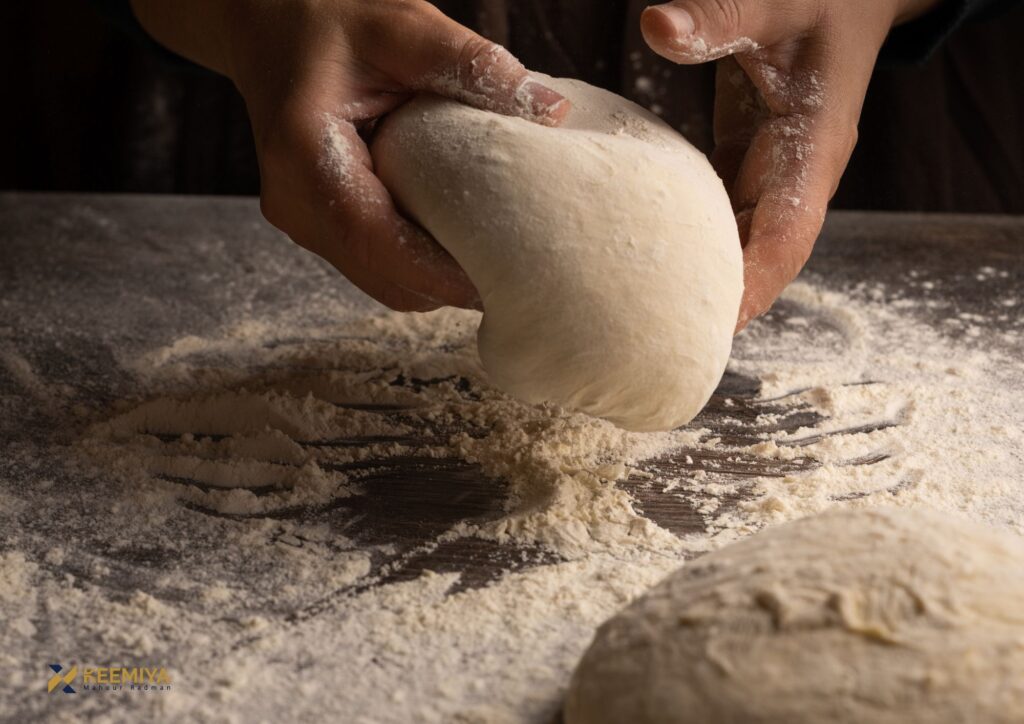
2. Kneading
- Gluten network formation is improved due to enzyme-corrected hydration
- Lipases/phospholipases create emulsifier-like molecules improving network stability
3. Bulk Fermentation
- Yeast consumes sugars produced by amylases
- CO₂ production increases due to better enzyme activity
- Enzymes continue modifying starch and gluten for optimal elasticity/extensibility
4. Final Proof
5. Early Baking (Up to 55–60°C)
- Enzymes accelerate:
- Sugar production (browning & flavor)
- Gas cell expansion
- Crumb setting
6. Mid Baking (60–80°C)
- Most enzymes deactivate
- Thermostable amylases remain active (if used)
Enzyme Synergy: Why They Work Better Together
Enzymes rarely act alone. In industrial baking, enzyme blends create synergy:
| Enzyme | Works With | Result |
|---|---|---|
| Amylase (ECOENZYME-FAA) | Xylanase (ECOENZYME-XYL F, XYL B) | Higher volume + better gas retention |
| Lipase (ECOENZYME-LIP, PL) | Amylase (ECOENZYME-FAA) | Strong crumb with softer texture |
| Protease (ECOENZYME-NP) | Xylanase (ECOENZYME-XYL F, XYL B) | Better dough handling for high-fiber flours |
| Maltogenic Amylase | Lipase | Longer softness + improved crumb resilience |
Perfect formulation depends on:
- Flour strength
- Falling number
- Bread type
- Process parameters
When Should Bakers Add Enzymes?
Add enzymes when flour shows:
- High Falling Number (low natural amylase)
- Poor fermentation
- Pale crust
- Tight crumb
- Weak gas retention
- Dough too elastic or too tough
- Need for long shelf life
Applications:
- Industrial pan bread
- Buns and rolls
- Croissants and puff pastry
- Whole wheat bread
- Soft sandwich bread
- Long-shelf-life products
Benefits of Enzyme Use in Modern Baking
Quality improvements
- Higher and more stable loaf volume
- Better crumb softness and structure
- Improved color and flavor
Processing benefits
- Reduced mixing time
- Better machinability
- Consistent dough performance
Shelf-life extension
- Delayed staling
- Reduced crumbliness
- Longer freshness
Clean-label solutions
- Replace emulsifiers, oxidizers, and chemical additives
- “Enzyme-assisted” is consumer-friendly and natural
Conclusion
Enzymes are the core biochemical tools that transform flour into bread with superior texture, structure, flavor, and shelf life.
For bakers and food technologists, understanding enzyme behavior is essential for controlling dough performance and delivering consistent, high-quality bakery products.
As flour quality varies by origin, season, and wheat genetics, enzymes provide the precision and stability required in today’s modern baking industry.